
Practical questions
Exercise Is Not a Punishment for Eating
Movement can support health, but its meaning changes when every meal creates a debt you feel compelled to repay. Feeling unable to rest, eating only after a workout or exercising despite illness can be important concerns to discuss. They are not proof that a weight-loss plan is especially disciplined.
General information for adults. Not a substitute for medical assessment.
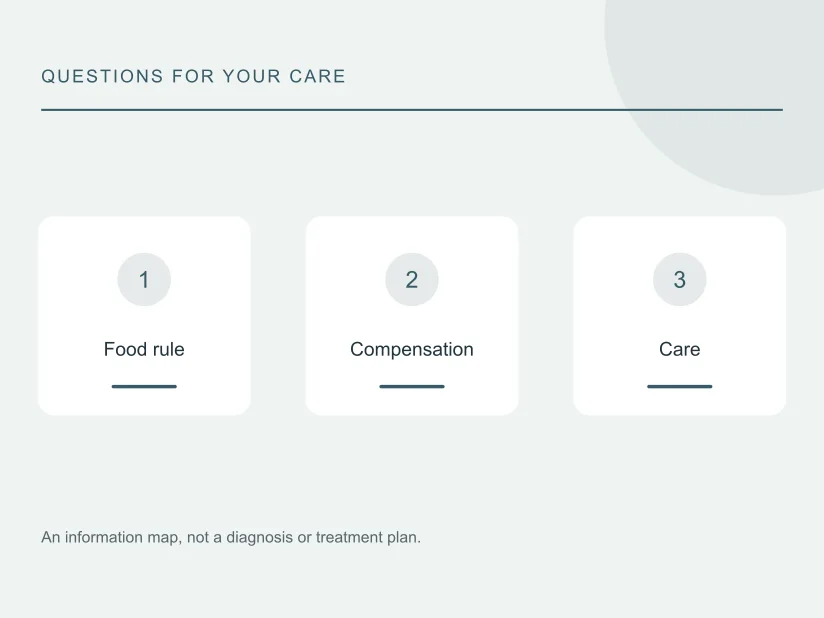
Notice the rule you feel you must obey
The issue may be a rigid requirement to burn a particular amount, repeat a workout after eating or avoid social meals unless you can compensate. Describe those rules and how you feel if you cannot follow them. An activity tracker cannot decide whether that pattern is safe. The emotional purpose of exercise matters alongside duration, intensity and physical health.
Source: NHS: Eating-disorder symptoms
Do not use a calorie display to settle the debt
A device estimate is not a precise account of what your body needs or permission to skip food. Ask your clinician or dietitian how activity and nutrition should work together in your circumstances. If pain, exhaustion or illness is present, explain it before continuing an unreviewed routine. This article does not set a replacement exercise target or calculate a compensation allowance.
Ask for support rather than another challenge
Excessive exercise and restrictive eating can be part of a wider mental-health difficulty, but an online article cannot diagnose you. Seek a supportive assessment if the routine feels out of control or is limiting daily life. Mention the behaviours honestly, including any pressure from a programme or online group. A safe plan may need more than encouragement to try harder.
Source: NHS: Eating-disorder symptoms · NHS: Eating disorders
Common questions
Is all regular exercise a problem?
No. This article concerns distress, compulsion and harmful compensation, not a diagnosis based on enjoying activity.
Can a watch tell me whether I have earned food?
No. Food is not a reward that must be earned from a device’s energy estimate.
What should I say at an appointment?
Explain the rules you feel compelled to follow, what happens if you rest and any physical symptoms or restrictions.
Sources and information limits
Sources support general medical principles, not the UAE booking policies or service availability. Confirm instructions and local arrangements with the care provider. The update date does not claim clinician review.
Content policy and review statusQuestions before arranging an appointment?
Enquire about the next steps and availability. An enquiry does not confirm a booking or diagnosis and is not an emergency service.